Call Me
+86-21-50125451
Search
CN

Email
tinali02@126.com
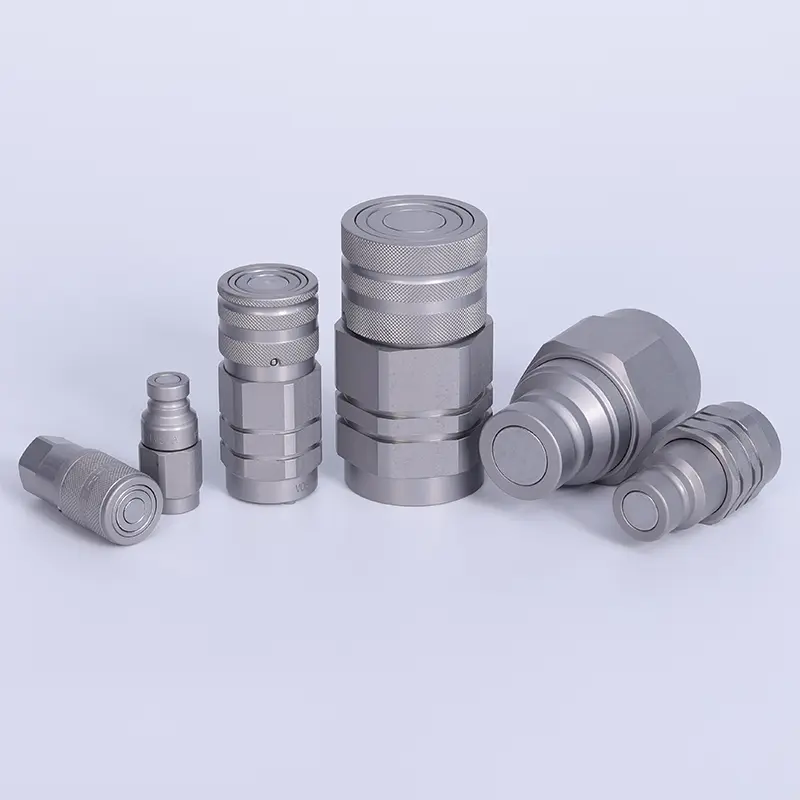
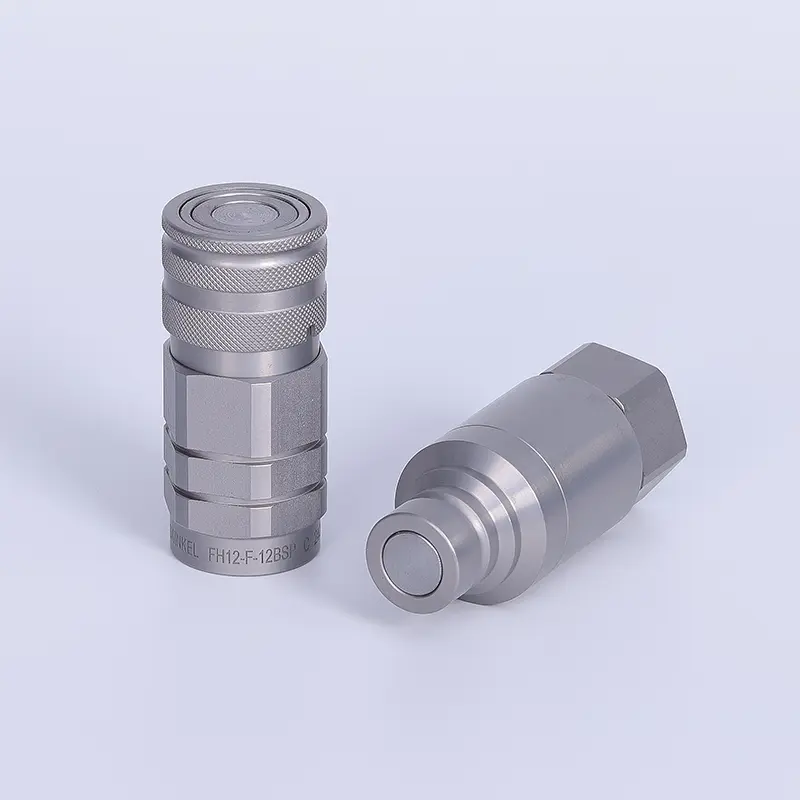
In modern hydraulic systems, quick couplings serve as the core components for connecting and disconnecting fluid lines. Their performance directly dictates the operational efficiency and safety of the entire system. Among various technical indicators, the quick pressure relief function has emerged as a key standard for measuring the advancement of a quick coupling. It not only significantly improves equipment maintenance and line-switching efficiency but also fundamentally ensures operator safety by mitigating potential system risks.
1. Ultimate Safety: Preventing Hazards Before They Occur Traditional hydraulic couplings often retain high-pressure fluid when disconnected. Sudden release can cause "hydraulic shock" or fluid injection, posing serious threats to personnel and equipment. Quick-relief couplings utilize optimized internal relief channels and valve designs to safely and smoothly release residual pressure the moment they are disconnected, completely eliminating these hazards. This is a steadfast technical implementation of the "Safety First" philosophy.
2. Doubled Efficiency: Time is Profit In high-frequency scenarios such as production line mold changes, equipment maintenance, or tool switching, every second saved translates to increased productivity. Quick pressure relief couplings allow operators to achieve faster, more convenient connection and disconnection even when system pressure has not been fully relieved manually. This significantly shortens non-operational time, leading to a leap in equipment utilization and work cycle efficiency.
3. System Protection: Extending Service Life Violent pressure fluctuations are a primary cause of early damage to hydraulic components. Quick pressure relief technology effectively avoids pressure peaks and hydraulic shocks through a controlled, flexible relief process. This protects critical components like pumps, valves, and seals, reduces leakage rates, lowers overall maintenance costs, and extends the service life of the entire hydraulic system.
Modern high-performance hydraulic quick couplings typically achieve quick pressure relief through one or more of the following sophisticated designs:
Built-in Relief Valve: During disconnection, a special spool structure first opens a relief channel, allowing high-pressure media in the closed cavity to bleed out slowly until pressure is balanced before full separation.
Multi-stage Disconnection Design: The connection and disconnection process is divided into multiple stages. In the first stage, a pilot channel is connected to perform pressure relief before the main seal is opened.
Low-pressure Chamber Design: A dedicated internal low-pressure energy storage chamber is designed to absorb and contain the small amount of high-pressure fluid released during disconnection, preventing external leakage.
These designs ensure the relief process is fast, orderly, and controllable, maximizing functionality while minimizing pressure loss and fluid waste.
Quick pressure relief technology has become standard in many high-end application fields:
Construction Machinery: For rapid switching of attachments on excavators and loaders, ensuring driver safety and operational continuity.
Industrial Production Lines: For mold changes in injection molding and die-casting machines, significantly reducing downtime.
Agricultural Machinery: For hydraulic connections between tractors and implements, enhancing field operational efficiency and safety.
Testing and Experimental Equipment: In situations requiring frequent connection/disconnection of high-pressure lines to protect precision instruments and operators.
The quick pressure relief function of hydraulic quick couplings has evolved beyond a simple performance parameter. It represents a profound evolution of hydraulic connection technology toward becoming smarter, safer, and more user-friendly. Choosing a coupling with superior quick-relief capabilities is not just choosing a reliable component; it is an investment in injecting "safety DNA" and an "efficiency engine" into your entire hydraulic system. In today’s pursuit of high-quality development, let advanced hydraulic connection technology provide a steady and powerful safeguard for your business.
Related Products
| Refrigeration Quick Release Couplings | QRC Coupling | Hydraulic Quick Coupler Pressure Relief Tool |
| Quick Connect Fittings HVAC | Quick Release Coupling for Gas | HVAC Quick Connect Fittings |