Call Me
+86-21-50125451
Search
CN

Email
tinali02@126.com
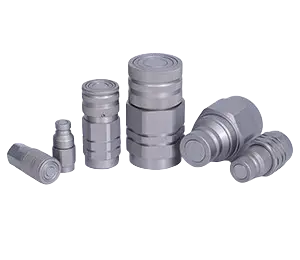
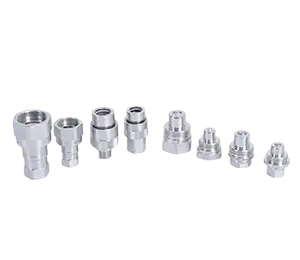
Quick couplings used in chemical processing, semiconductor manufacturing and other demanding fluid systems must provide more than fast connection. They must also withstand the operating medium, control leakage and help prevent contamination.
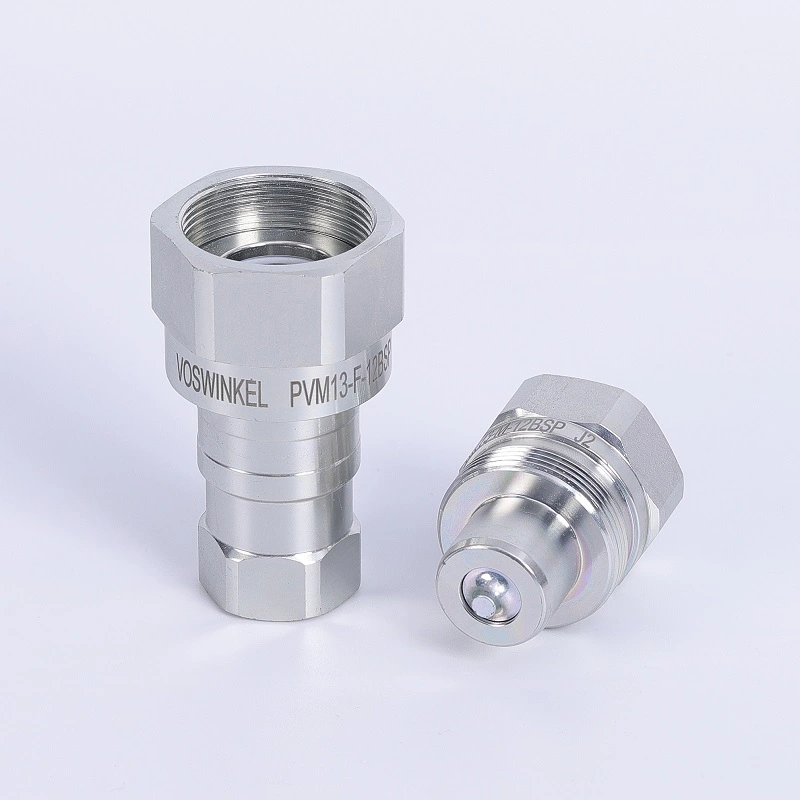
A stainless steel quick coupler can offer better corrosion resistance than a conventional carbon-steel coupling, but stainless steel alone does not guarantee compatibility with every fluid. Buyers must also evaluate the material grade, seals, pressure, temperature, valve design and cleanliness requirements.
This guide explains the main factors B2B buyers should review before sourcing stainless steel couplings for corrosive or high-purity fluid systems.
Stainless steel contains chromium and may include nickel, molybdenum and other alloying elements. Different stainless steel grades provide different levels of corrosion resistance, mechanical strength and temperature performance.
A stainless steel quick coupler may be suitable for applications involving:
Corrosive or chemically active fluids
Semiconductor electrolytes and process chemicals
Humid, outdoor or marine environments
Equipment requiring frequent cleaning
High-purity fluid-transfer systems
Applications sensitive to rust or material contamination
However, the fluid name alone is not enough to determine suitability. Concentration, temperature, pressure and exposure time can significantly affect corrosion behavior.
Buyers should provide complete operating information to the coupling supplier before selecting the material.
Stainless steel and carbon steel couplings can both provide reliable connections, but they are designed for different operating priorities.
| Selection factor | Stainless steel coupling | Carbon steel coupling |
|---|---|---|
| Corrosion resistance | Better suited to corrosive or humid conditions | Suitable for many standard hydraulic systems |
| Purchase cost | Usually higher | Usually more economical |
| Fluid compatibility | Can support a wider range of demanding media, depending on grade | Commonly used with compatible hydraulic oils |
| Cleanliness | Suitable for applications with higher cleanliness requirements | More common in general industrial equipment |
| Typical applications | Semiconductor, chemical and precision fluid systems | Construction, agriculture and general hydraulics |
Carbon steel may remain the more cost-effective choice for ordinary hydraulic equipment operating with compatible mineral oil in controlled environments.
Stainless steel should be selected when its corrosion resistance, cleanliness or service-life advantages justify the additional cost.
Fluid compatibility is one of the most important purchasing considerations. The coupling body, valves, springs and seals may not all use the same material, so buyers should review the complete assembly rather than only the external housing.
Provide the supplier with:
Exact fluid or chemical name
Chemical concentration
Operating and cleaning temperatures
Maximum system pressure
Expected connection frequency
Exposure to air, moisture or other chemicals
Required cleanliness level
Planned cleaning or flushing process
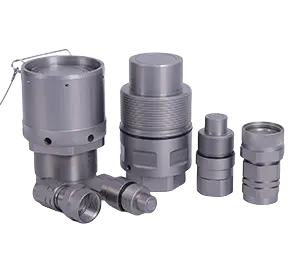
For semiconductor electrolyte systems, connection reliability and corrosion resistance are particularly important because fluid leakage or contamination can interfere with sensitive production processes. Kuaishi positions its RBVX coupling for semiconductor electrolytes as a corrosion-resistant, precision-engineered connection for demanding semiconductor applications.
Where several chemicals are used in the same production line, compatibility should be checked against every process fluid and cleaning agent.
The term “stainless steel” covers multiple grades with different compositions and performance characteristics. Buyers should not accept a quotation that identifies the material only as stainless steel without further clarification.
Ask the supplier to confirm:
Stainless steel grade used for each major component
Material certification availability
Machining and surface-finishing process
Whether wetted parts use the same grade
Surface roughness requirements, where applicable
Passivation or additional surface treatment
Batch traceability and inspection records
For critical fluid-transfer systems, buyers may also request a material certificate or chemical-composition report.
Precision machining is especially important around the valve seat, sealing groove and mating surface. Dimensional variation in these areas may lead to leakage, difficult connection or inconsistent performance between production batches.
A corrosion-resistant coupling body can still fail if the seal material is incompatible with the fluid. Chemical exposure may cause seals to swell, harden, soften or lose elasticity.
Before ordering, verify:
Standard and optional seal materials
Chemical compatibility
Minimum and maximum temperatures
Static and dynamic sealing requirements
Replacement-seal availability
Expected maintenance interval
Buyers should also define the acceptable leakage level. Applications involving expensive chemicals, refrigerants or semiconductor electrolytes may require stricter leakage control than ordinary water or compressed-air systems.
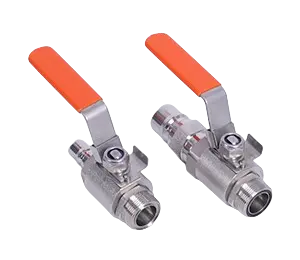
Automatic shut-off valves can help close the flow path when the coupling is disconnected. For processes where fluid loss and air entry must be minimized, buyers should ask for information about:
Disconnection spillage
Air inclusion during connection
Internal valve configuration
Pressure retention when disconnected
Leakage-test methods
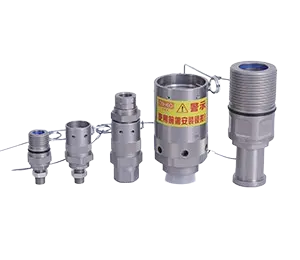
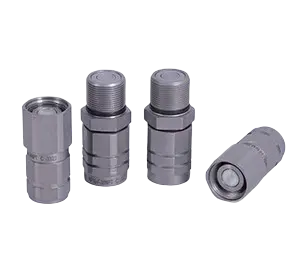
Kuaishi’s stainless steel coupling category is specifically positioned for semiconductor electrolyte applications requiring corrosion-resistant and reliable connections.
Material compatibility does not replace hydraulic or fluid-performance calculations. The coupling must also meet the system’s pressure and flow requirements.
Review the following specifications:
Rated working pressure
Proof and burst pressure
Required flow rate
Permitted pressure drop
Nominal body size
Port and thread type
Connection and disconnection method
Residual-pressure conditions
An undersized coupling may restrict the fluid path and create excessive pressure loss. An oversized model may increase equipment size, weight and cost without providing a meaningful benefit.
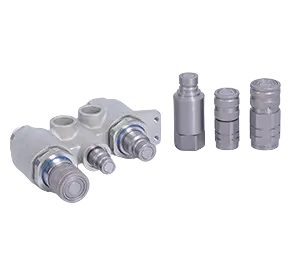
The male and female halves should also use compatible interfaces. Similar-looking couplings from different series or manufacturers are not necessarily interchangeable.
Before approving a stainless steel quick coupler for OEM installation or volume purchasing, request technical and quality information from the supplier.
The review should include:
Product drawings and dimensional tolerances
Stainless steel and seal specifications
Pressure and leakage-test reports
Flow or pressure-drop data
Chemical-compatibility confirmation
Cleaning and packaging method
Sample availability
MOQ and production lead time
Batch identification and traceability
Customized port or interface options
Samples should be tested with the actual fluid and equipment whenever possible. A short installation test using water or hydraulic oil may not accurately represent long-term exposure to aggressive process chemicals.
No. Suitability depends on the stainless steel grade, chemical concentration, temperature, pressure, seal material and exposure conditions.
No. Carbon steel is often more economical for standard hydraulic systems. Stainless steel is preferable when corrosion resistance or process cleanliness is a major requirement.
Depending on the manufacturer, buyers may request different ports, seals, dimensions or connection configurations. Technical requirements should be confirmed before production.
Provide the fluid, concentration, pressure, temperature, flow rate, port size, connection frequency, operating environment and required quantity.
Selecting a stainless steel quick coupler requires coordinated evaluation of fluid compatibility, stainless steel grade, seal material, pressure, flow, leakage control and manufacturing quality. Buyers should avoid choosing by material name or connection size alone, especially for chemical and high-purity processes.
Kuaishi supplies stainless steel coupling solutions for semiconductor electrolyte and demanding fluid-transfer applications. Provide Kuaishi with your medium, pressure, temperature, connection and quantity requirements to discuss a suitable standard or customized coupling solution.